

Every agent knows its part.
JADO brings a design studio's order to your AI tools: a brief, a route, clear roles and a review before anything is called done.
- Routes
- 8
- Roles
- 5
- Steps
- 4
Every hand has a task.
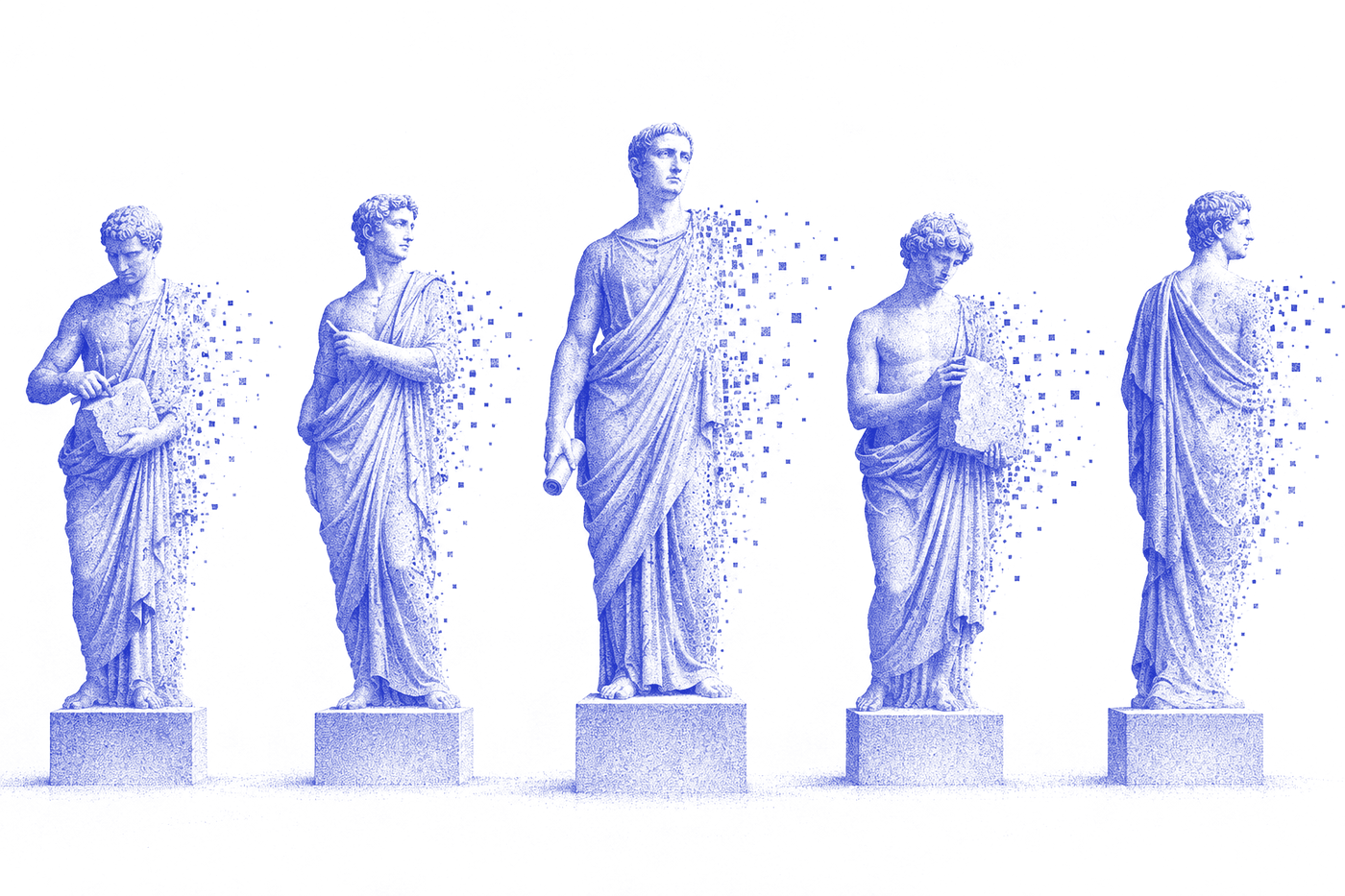

Ask for a page and JADO decides who researches, who designs, who builds and who reviews. You set how finished it gets, how often it asks and how much it spends.
From brief to evidence.
Four steps, always in this order. Each one leaves something the next step can read.
01Clarify
Record the goal, the scope and the three dials before anyone draws.
- Leaves
- A shared brief
02Route
jado-flow picks the smallest route that fits and keeps it through every handoff.
- Leaves
- A work contract
03Make
Each role researches, designs, writes or builds inside its own scope.
- Leaves
- Artboards or code
04Verify
The stage sets the checks, and Ship always adds a reviewer who didn't make the work. It's done when the evidence is there.
- Leaves
- Evidence you can open




Three agents build. Two reviewers check.
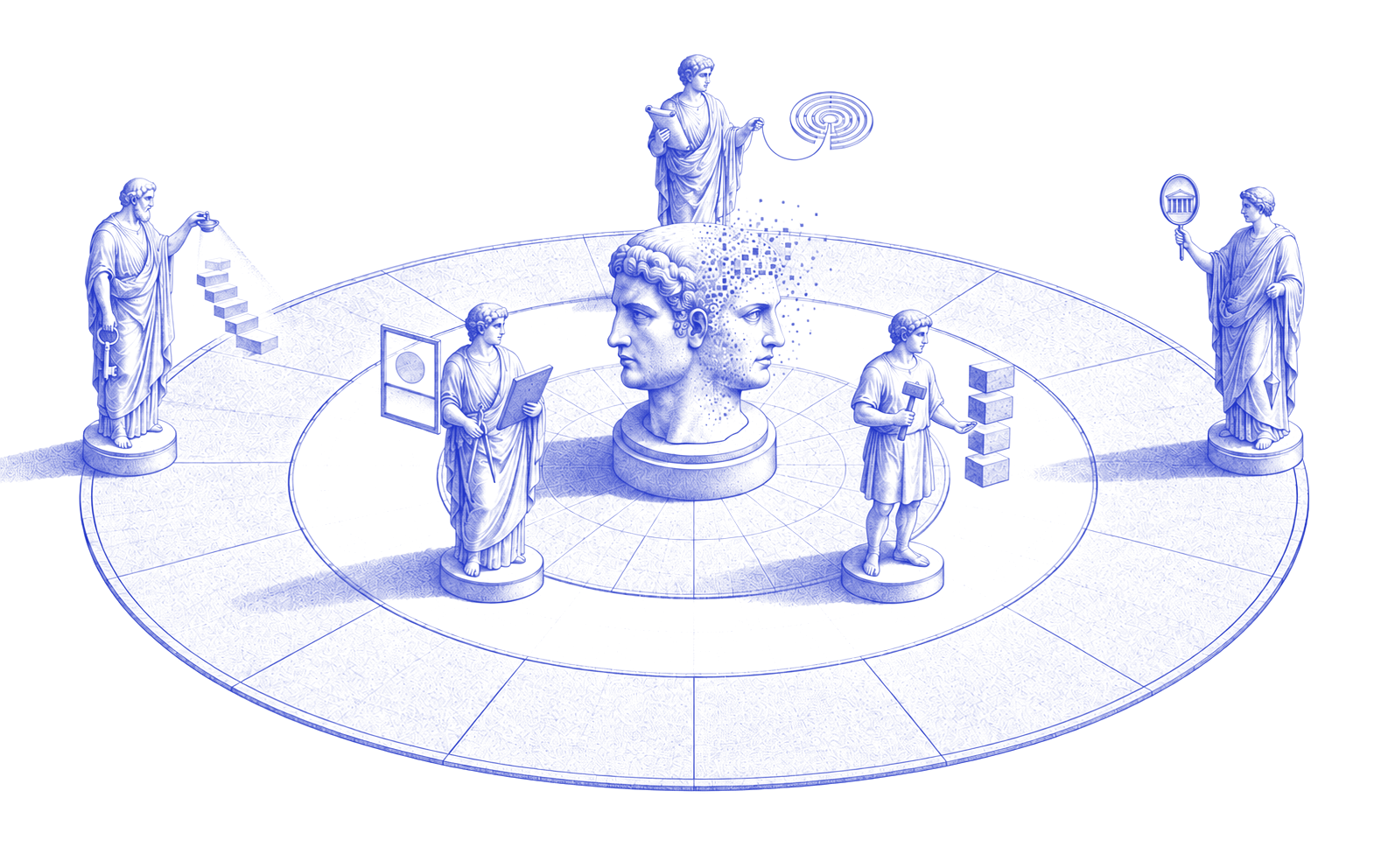
The three agents share one contract and pass work along. The two reviewers stay read-only and step in when the stage calls for them.
Paths and words
Research, flows, contentArt direction
Palette, type, compositionSystem and build
Tokens, UI, motionTests the paths
Tasks, states, accessibilityChecks the captures
Captures against directionAgents on the inner ring make the work, reviewers on the outer ring check it from outside.
Eight routes. One graph.
Set the stage, your involvement and the budget. The matrix marks the routes that stage allows. Open one to see how it runs with your settings.
Stage
Involvement
Budget
7 of 8 routes run at Explore
4 options · No independent review
- Runs at Explore
- Another stage
- Doesn't run
RouteERS
Explore7 routes
4 options
No independent review
Refine8 routes
2 options
Independent review
Ship3 routes
1 option
Independent review
JADO makes one fix in code or on Paper with no helpers and 1 repair round, and no independent review at Explore. It asks you at an open direction decision.
What runs
- Asks you, if openRead
- Edit
- Check
- Deliver
Must pass
- Capture check
The change is already defined, so JADO edits only what is in scope. It captures the result and checks it against what you expected. After one repair round, anything still wrong is reported.
Playbook R01
JADO builds 4 options with 4 helpers, 2 at once and 1 repair round, and no independent review at Explore. It asks you at an open direction decision and before code.
What runs
- Asks you, if openMandate
- Brief
- Design
- Build
- Review
- Deliver
Must pass
- A gate for each output
- Independent reviews at Ship
You set where it stops: UX, canvas or code. JADO works through each in order and checks it before moving on.
Playbook R07
JADO collects references with 2 helpers, 1 at once and no repairs, and no independent review at Explore. It asks you at an open direction decision.
What runs
- Asks you, if openQuestion
- Search
- Curate
- Hand off
Must pass
- Reference selection
- Sources and coverage
Pattern questions use real products. Style questions can use Pinterest, images and websites. JADO records why each reference was kept or rejected. A moodboard is built only when you ask for one.
JADO builds 4 options on Paper with 4 helpers, 2 at once and 1 repair round, and no independent review at Explore. It asks you at an open direction decision, at option selection and before code.
What runs
- Asks you, if openQuestion
- Design
- Inspect
- Asks youYou choose
Must pass
- Self-check
- Your selection
Every option tests a different idea on the same content. Pick one, combine them or ask for another round before anything moves to code.
Playbook R05
JADO builds 4 options in VariantHub with 4 helpers, 2 at once and 1 repair round, and no independent review at Explore. It asks you at an open direction decision and at option selection.
What runs
- Asks you, if openRequest
- Build
- Isolate
- Check
- Asks youYou choose
Must pass
- Comparison check
- Your selection
Each alternative tests its own structural idea in isolation. JADO checks that every option opens and compares before you pick. Moving your pick into shared code needs its own approval.
Playbook R09
JADO prepares 2–4 options for your decision with 2 helpers, 2 at once and no repairs, and no independent review at Explore. It asks you at an open direction decision and at option selection.
What runs
- Asks you, if openClarify
- Fill gaps
- Options
- Asks youYou decide
Must pass
- Your decision
You make the call, one open decision at a time. Gaps in evidence, flow or direction are filled first. Then you get two to four distinct options, with JADO's recommendation first.
Playbook R03
JADO gathers three independent proposals with 4 helpers, 2 at once and no repairs, and no independent review at Explore. It asks you at an open direction decision.
What runs
- Asks you, if openQuestion
- Propose
- Compare
- Decide
Must pass
- Independent proposals
- Recorded decision
Research, UX and visual specialists answer the same question before seeing each other's work. A substantive conflict gets one targeted reply. The decision is recorded with its reasons and any dissent.
Playbook R08
Build runs at Refine and Ship. Switch the stage to or to see how it runs with your settings.
Playbook R04

Put your agents to work, in order.
git clone https://github.com/mattiamichini-design/jado && cd jado && npm ci && npm run jado -- install --globalRequires Node.js 22.22 or later. Native profiles for Claude Code, Codex and OpenCode.